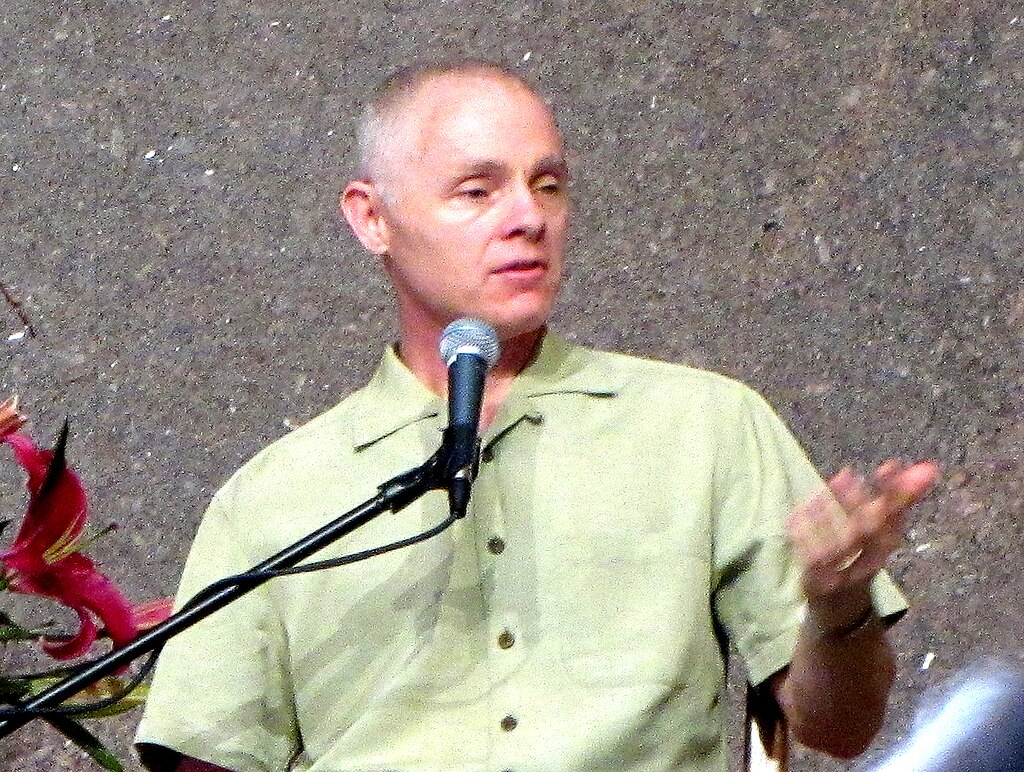
Unraveling the Illusion of Opinion: A Path to Truth
Adyashanti's poignant assertion, "Don't seek the truth. Just cease to cherish opinions," invites us to reconsider our relationship with our beliefs and perceptions. In a world saturated with conflicting viewpoints, the quest for truth often becomes entangled with the clinging to our opinions. This statement challenges us to let go of our attachments, suggesting that true understanding arises not from the relentless pursuit of truth but from the relinquishment of our preconceived notions. The stakes are high; in our attachment to opinions, we may obscure the very essence of reality.
Delving deeper, we find that Adyashanti's words resonate with the core of non-dual philosophy, which emphasizes the interconnectedness of all existence. The act of cherishing opinions can create a barrier between ourselves and the profound truths that lie beyond our mental constructs. By ceasing to cling to these opinions, we open ourselves to a more expansive awareness, one that transcends the limitations of dualistic thinking. This shift is not merely an intellectual exercise; it is a transformative practice that invites us to experience life more fully and authentically.
The image / the metaphor
At the heart of Adyashanti's quote lies a vivid metaphorical landscape. The verb "seek" implies a pursuit, a chase that often leads us down winding paths filled with distractions and illusions. In contrast, "cease to cherish" evokes a sense of release, a gentle letting go of the weight of our opinions. This imagery suggests that truth is not a distant treasure to be unearthed but rather a state of being that emerges when we stop clinging to our mental constructs. The felt sense of this quote is one of liberation, as if shedding layers of armor that have long shielded us from the rawness of existence.
Going deeper, we can see that the metaphor extends beyond the individual to encompass the collective human experience. Our opinions often serve as barriers that separate us from one another, creating divisions based on belief systems and ideologies. By ceasing to cherish these opinions, we not only free ourselves but also contribute to a more harmonious existence. This act of letting go can be likened to clearing fog from a window, allowing the light of truth to shine through unobstructed, illuminating the shared essence of humanity.
In the speaker's tradition
Adyashanti's teachings are deeply rooted in the non-dual tradition, which emphasizes the dissolution of the self and the realization of oneness. Concepts such as sunyata (emptiness) and kenosis (self-emptying) resonate with the essence of his message. In this context, cherishing opinions represents a form of attachment that obscures our understanding of the true nature of reality. By letting go of these attachments, we align ourselves with the fundamental principle of non-duality, which posits that separation is an illusion and that we are all interconnected manifestations of the same source.
In the realm of spiritual texts, we can draw parallels with the teachings found in the Heart Sutra, which speaks of the emptiness of all phenomena. The Sutra reminds us that form is emptiness and emptiness is form, suggesting that our rigid opinions about reality are mere constructs that can be transcended. This alignment with the wisdom of ancient texts underscores the timeless nature of Adyashanti's message, inviting us to engage with the profound depths of our being beyond the confines of opinion.
Living the teaching
Consider a modern scenario where this teaching can be applied: a heated discussion among friends about a contentious political issue. Each person clings to their opinions, fortified by personal experiences and societal narratives. In this environment, the quest for truth becomes overshadowed by the desire to be right, leading to conflict and division. By embodying Adyashanti's teaching, one might choose to step back, listen deeply, and release the need to defend their viewpoint. This shift not only fosters a more open dialogue but also creates space for genuine understanding and connection.
In a different context, imagine a relationship strained by differing beliefs. One partner may hold strong opinions about a lifestyle choice, while the other feels equally passionate about their perspective. By applying the principle of ceasing to cherish opinions, both individuals can approach the conversation with curiosity rather than defensiveness. This practice of non-clinging allows them to explore the underlying values and emotions driving their beliefs, paving the way for deeper intimacy and mutual respect. In both scenarios, the act of letting go of rigid opinions cultivates a fertile ground for authentic connection and understanding.
A reflection
As we contemplate Adyashanti's profound invitation, we are left with a contemplative question: What opinions am I holding onto that may be obscuring my perception of truth? This inquiry invites us to examine our beliefs with honesty and openness, recognizing that our attachments may limit our capacity to experience the fullness of life. In this exploration, we may discover that the path to truth is not a destination to be reached but a continuous unfolding that arises from the willingness to let go.