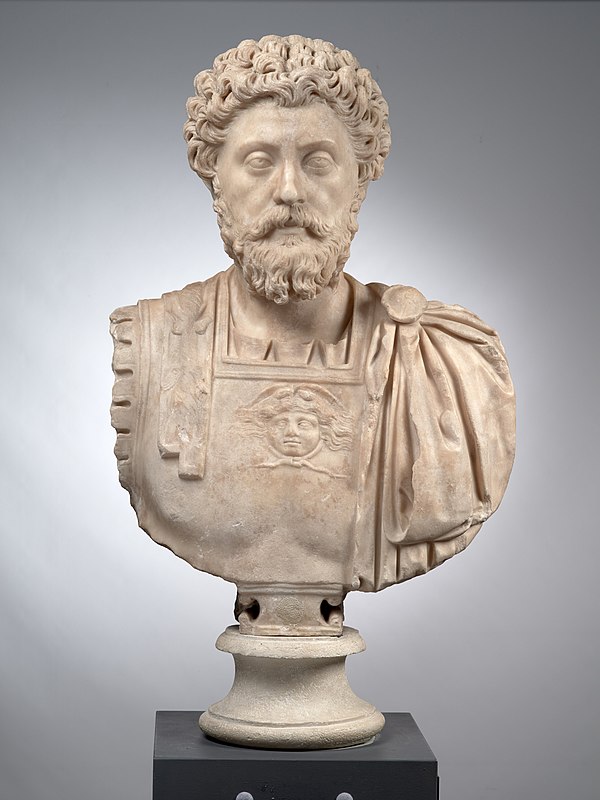
The Inner Fortress: Finding Strength in Self-Mastery
Marcus Aurelius, the Stoic philosopher and Roman Emperor, reminds us that true power lies not in our ability to control external circumstances, but in our mastery over our own minds. "You have power over your mind — not outside events. Realize this, and you will find strength." This profound insight invites us to explore the depths of our inner world, suggesting that our responses to life’s challenges define our experience far more than the events themselves. In a world often filled with chaos and unpredictability, this teaching holds the key to resilience and inner peace.
In a society that frequently emphasizes external achievements and validations, Aurelius’s words serve as a gentle yet firm reminder of the importance of self-discipline and mental fortitude. The notion that we can cultivate strength from within, regardless of external turmoil, is both liberating and empowering. By recognizing that our thoughts and perceptions shape our reality, we can begin to navigate life with a sense of agency and purpose, transforming obstacles into opportunities for growth.
The image / the metaphor
The imagery in Aurelius's quote evokes a sense of introspection and self-empowerment. The phrase "power over your mind" suggests a realm of influence that is deeply personal and intimate, contrasting sharply with the uncontrollable nature of "outside events." The verbs chosen — "have" and "realize" — imply an active engagement with one’s own mental landscape, urging us to take responsibility for our thoughts and reactions. This inner dominion is not merely a passive state but an active practice of awareness and choice.
Diving deeper into the metaphor, we can envision the mind as a fortress, a stronghold that can withstand the storms of external circumstances. Just as a fortress is fortified against invaders, so too can our minds be fortified against the chaos of life. By cultivating self-discipline and clarity, we build walls of resilience that protect us from the tumult outside. This metaphor invites us to consider how we can strengthen our mental defenses and cultivate a sanctuary within ourselves, where peace and strength reside.
In the speaker's tradition
Marcus Aurelius’s teachings are deeply rooted in the Stoic tradition, which emphasizes the importance of virtue, reason, and self-control. Central to Stoicism is the concept of *apatheia*, or freedom from destructive emotions, which aligns closely with Aurelius's assertion that our power lies within. This notion resonates with similar ideas found in Eastern philosophies, such as *dharma* in Buddhism, which encourages individuals to act in accordance with their true nature and responsibilities, thus finding strength and purpose in their actions.
In his *Meditations*, Aurelius often reflects on the transient nature of life and the importance of focusing on what is within our control. For instance, in Book 6, he emphasizes the need to align our thoughts with nature and reason, suggesting that true strength comes from understanding and accepting the limitations of our influence. This echoes the teachings of the *Tao Te Ching*, where Laozi speaks of the importance of aligning oneself with the natural flow of life, further illustrating the universality of this wisdom across different traditions.
Living the teaching
Consider a modern scenario where this teaching can be applied: a professional facing unexpected challenges at work. Perhaps a project has gone awry due to unforeseen circumstances, leading to frustration and anxiety. In this moment, the individual is faced with a choice: to dwell on the external factors that are beyond their control or to focus on their response to the situation. By embracing Aurelius's wisdom, they can redirect their energy towards problem-solving and maintaining a calm demeanor, thus transforming a potentially stressful experience into an opportunity for growth and learning.
Another application of this teaching can be found in personal relationships. Imagine a situation where a loved one reacts negatively to a comment made in passing. The initial instinct may be to feel hurt or defensive, allowing external events to dictate emotional responses. However, by recognizing that we have power over our minds, we can choose to respond with empathy and understanding, seeking to communicate openly rather than allowing misunderstandings to fester. This conscious choice not only strengthens the relationship but also cultivates a deeper sense of inner peace and resilience.
A reflection
As we contemplate Marcus Aurelius's profound insight, we are invited to reflect on our own lives: In what areas do we allow external events to dictate our emotional state? How might we reclaim our power by focusing on our thoughts and responses instead? This contemplation encourages us to explore the boundaries of our inner strength and to recognize the freedom that comes from self-mastery. By embracing this teaching, we can cultivate a life of intentionality and resilience, grounded in the understanding that our true power lies within.


Join the BrightStar Community
Stay connected with daily inspiration, event announcements, and community wisdom